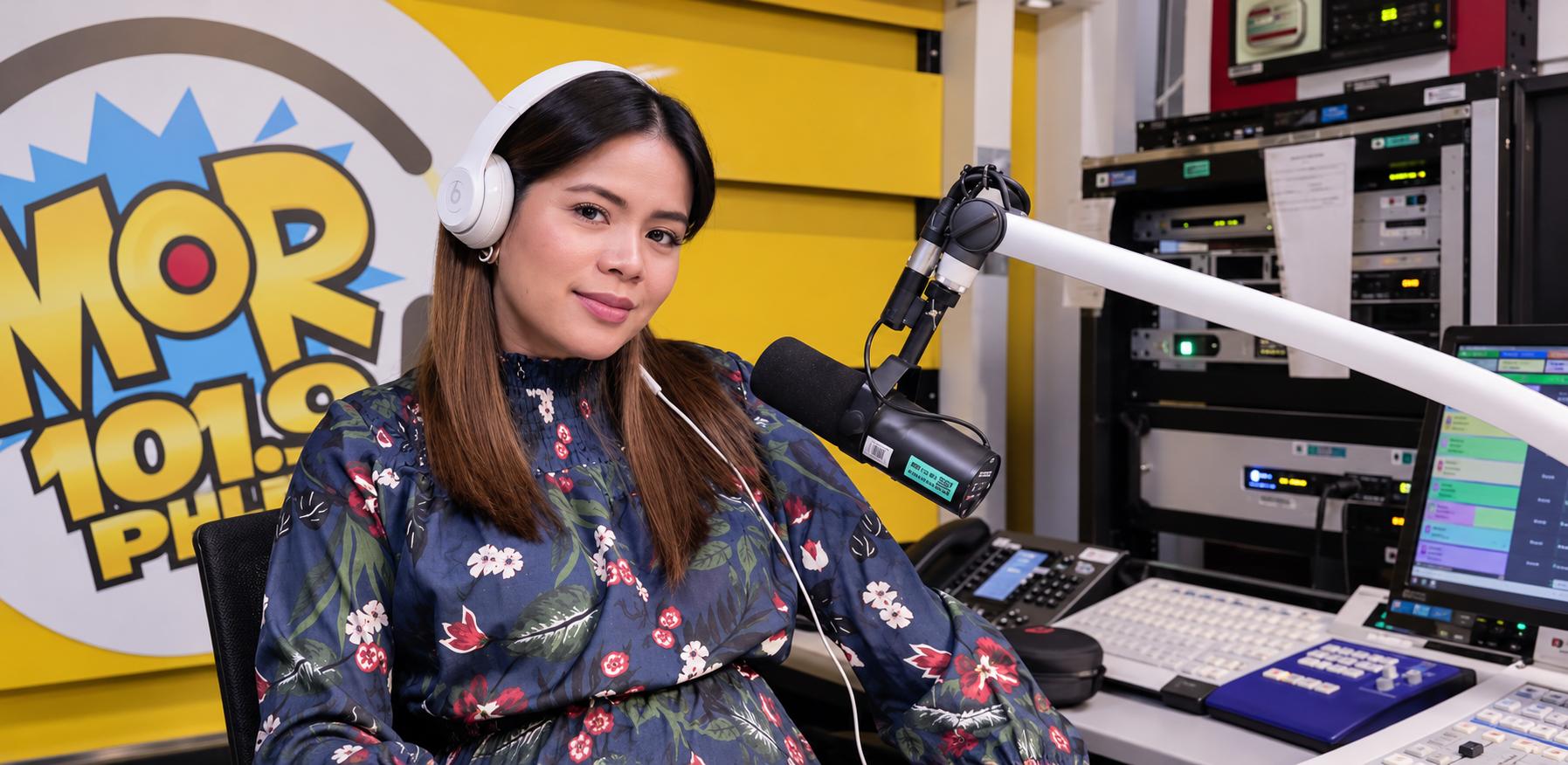
DJ Chacha: From Late-Night Love Advice to a Morning Voice on True FM
How Czarina Marie Balba-Guevara built a radio career through humor, listener conversations, motherhood and a lasting partnership with Ted Failon.
DJ Chacha is a Filipino radio personality whose career connects two different listening experiences: the intimate, sometimes mischievous world of late-night relationship advice and the faster-moving conversation of morning news and public affairs. Born Czarina Marie Balba and now known as Czarina Balba-Guevara, she co-hosts Ted Failon at DJ Chacha sa True FM. Listeners in Metro Manila can hear the partnership on 105.9 True FM, with broadcasts also reaching audiences online.
Her route toward broadcasting included a college DJ hunt. In a 2019 interview with the Philippine Daily Inquirer, Chacha said she won such a competition while studying at Lyceum of the Philippines. The same account identified Nicole Hyala and Asia Agcaoili as radio personalities she admired. Those influences place her early ambitions within an established tradition of women making a distinctive place for themselves on Philippine radio.
Her professional beginnings were more gradual than an immediate starring role. A 2013 account in The Philippine Star traced her entry into ABS-CBN’s FM operation to 2008, when she was doing creative ad-libs. A break came in 2009, when she filled in for a DJ who was on leave. Her rapport with listeners attracted attention, and by 2011 she had been given her own program.
That progression allowed her to develop the style associated with the name Chacha Babes. Humor was part of the presentation, but so was listening to callers describe uncertainty, disappointment and complicated relationships. Her early interviews emphasized that people sought more than an answer: some needed an unfamiliar person to hear them out without the complications of asking someone in their immediate circle. Her familiar “mwahmwah, tsuptsup” expression also became a recognizable part of her on-air identity and was eventually turned into a single by Star Records.
During her MOR years, Heartbeats with Chacha Babes became a prominent platform for that personality. ABS-CBN’s 2015 program information placed the show from 9 p.m. to midnight, a setting suited to conversations that could move between humor and emotionally difficult subjects. The network promoted her as its “Queen of Primetime Radio,” reflecting the place she had developed in its evening programming.
Her advice-giving persona also reached print. She released Napakasakit Ate Chacha, followed by Anak ng Patola: Mas Masakit Ate Chacha in 2015. The books extended the familiar radio relationship into another form: readers could encounter the same candid approach to love and relationships away from the microphone. Her work also included the digital interview show Invasion of Privacy, in which she visited celebrities’ personal spaces and asked about their lives and relationships.
Recognition followed. ABS-CBN reported that she received honors from the Yahoo! Celebrity Awards, Gawad TANGLAW and Gandingan Awards in 2014. In 2015, she was named Best Female FM Radio Host at Trinity University of Asia’s Platinum Stallion Media Awards and Best FM DJ at the Gandingan Awards of the University of the Philippines Los Baños.
A different audience encountered her through Pinoy Big Brother: Lucky Season 7 in 2016. Her celebrity-housemate stint was brief. She voluntarily left, explaining that she missed her daughter, Sabb, and was worried about the work that supported her child. The decision revealed a responsibility that existed alongside the lively radio persona: she was a mother weighing a television opportunity against her child and livelihood.
Family later became another visible part of her public story. She married businessman Michael “Mike” Guevara on May 30, 2019. In her wedding vows, she thanked him for loving both her and her daughter. In June 2024, she announced the birth of her third child. These milestones provide context for a broadcaster whose professional conversations have so often involved love, commitment and family life.
Meanwhile, her work on DZMM helped open a different direction in broadcasting. On Failon Ngayon, she became known as Ted Failon’s “Baby Girl.” An account of their partnership described her initially reading greetings and comments before contributing opinions about the current issues being discussed. It was a gradual expansion from audience interaction into a more active role in a news-oriented conversation.
Then came the disruption of 2020. MOR lost its FM broadcast signal in May but continued serving listeners online for a time. Its Manila operation held its farewell special on August 28, 2020, following the denial of a new ABS-CBN franchise. The network’s own announcement distinguished that final day of operations from the earlier loss of the station’s broadcast signal.
Chacha spoke openly about what the closure meant to her. In July 2020, she described losing the station she had worked with for 12 years as one of the lowest points of her life. Her public messages conveyed grief for the workplace, her colleagues and the effort they had invested together. The departure marked the end of the organization where she had grown from a newcomer into an established host.
Ted Failon became a pivotal professional ally during that transition. Chacha credited him with helping bring her into the opportunity at TV5’s Radyo5. Contemporary reporting also said Failon insisted that her name appear in the new program’s title. Her position in the partnership was therefore made explicit: she was joining as a named co-host.
Their new program launched on October 5, 2020, on Radyo5 92.3 News FM. Its announced mix included news, music and inspiration. For Chacha, it offered a way to continue working in the medium she had repeatedly described as her first love, while carrying her experience with listener conversation into a different daily format.
The partnership subsequently continued under the True FM brand. On November 4, 2024, True FM’s Metro Manila service moved from 92.3 to 105.9 FM, bringing its established personalities and programs to the new frequency. The move also formed part of a broader strategy spanning radio, television, podcasts and digital platforms.
DJ Chacha's journey shows how a radio personality can develop across different kinds of conversation. The early years taught her to build rapport with callers discussing private problems; later work placed her in discussions about public concerns. Across those changes, the central thread has been her attachment to radio—and her ability to make a conversation feel accessible to the person listening.